Ollie Herdman
The Best Christmas Pageant EverOllie Herdman is a member of the Herdman family whose brief appearances link the children’s unsupervised everyday life to the Christmas pageant. At a fire, doughnuts stuffed into his clothes make him a vivid part of the scene’s comic aftermath; later, as one of the pageant’s Wise Men, he asks what the title means, prompting an explanation of the biblical visitors.
Identity and Family Circumstances
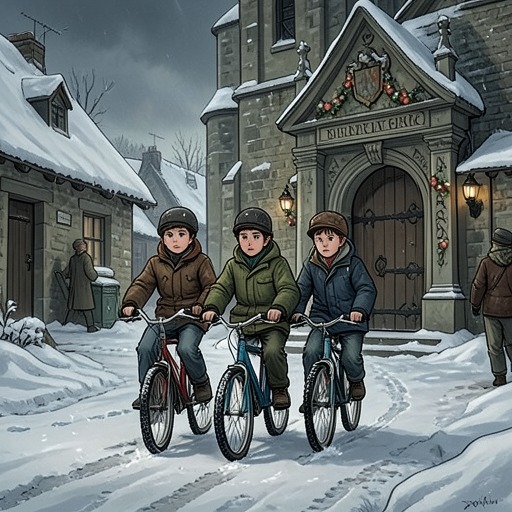
Ollie belongs to a large family that largely looks after itself. Their mother works double shifts at a shoe factory and is often away; although a social-service worker tries to arrange welfare support so she could work one shift and spend more time with the children, she declines. The narrator reports that the Herdman children take care of one another in an older-to-younger chain, with the older children teaching the younger ones what they know. The account does not specify Ollie’s place in that chain, but it situates him within a household where children, rather than consistent adult supervision, carry much of the responsibility for daily life.
The children also grow up without their father: he disappeared after climbing onto a train when Gladys was two. The narrator says the Herdmans did not know what he was or where he was, and that nobody blamed him. This family history helps explain the circumstances surrounding Ollie without assigning him a particular response or experience that the narrative does not record.
The Toolhouse Fire
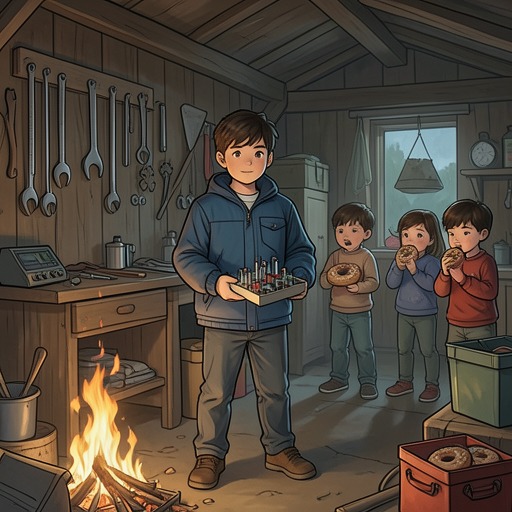
After Fred Shoemaker’s toolhouse burns to the ground, the scene draws two fire engines, two police cars, volunteer firefighters, and five dozen doughnuts from the Tasti-Lunch Diner. The narrator supposes the fire was an accident, while acknowledging uncertainty about how it began. The doughnuts, intended for the firefighters, are gone by the time the fire is out: the Herdmans have eaten what they can and stuffed the rest into their pockets and down the fronts of their shirts. Ollie’s middle is visibly ringed with doughnuts.
That detail makes Ollie part of the scene’s aftermath rather than evidence of who started the fire. The narrator is astonished that the children linger at the site despite everyone knowing they were responsible, and a firefighter questions Claude about whether the children started it while smoking cigars. The account does not say that Ollie set the fire or explain why he stays; his memorable contribution is the physical evidence of the stolen doughnuts, an absurdly concrete counterpoint to the scale of the emergency.
A Wise Man in the Christmas Pageant
When the narrator’s mother organizes the Christmas pageant, nobody volunteers to be a Wise Man except Leroy Herdman, Claude Herdman, and Ollie. Their willingness to take the parts leaves the production with Herdman children in major roles. Ollie is therefore not merely present at the pageant: he is one of its assigned Wise Men, part of the group that gives the production its unexpected cast.
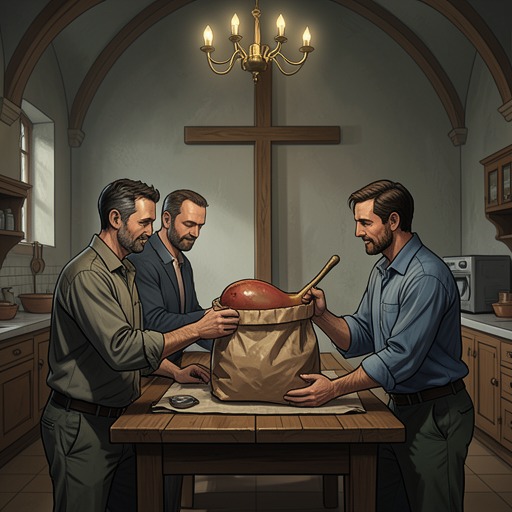
During a reading about Jesus’s birth in Bethlehem, Ollie asks, “What does it mean, Wise Men?” He follows with, “Were they like schoolteachers?” Claude answers that they were like the President of the United States. The narrator’s mother responds that this is close, then clarifies that the Wise Men were kings. Ollie’s question opens a small but revealing exchange: the pageant assigns him a biblical role before he knows what the title means, and the rehearsal becomes an occasion to explain the story rather than simply recite it.
Narrative Significance
Ollie’s appearances are brief, but they place him at two points where the Herdman children’s public reputation meets their ordinary conduct. At the fire, he is associated with the family’s conspicuous scavenging; in the pageant, he is a willing participant whose basic question exposes how little the children know about the Christmas story. The contrast does not establish a personal transformation for Ollie, which the account does not trace. Instead, his question helps show how the pageant brings the children into contact with a story they have not previously understood.